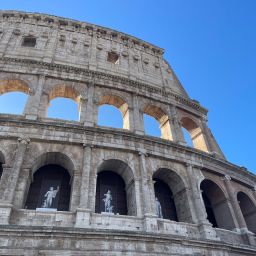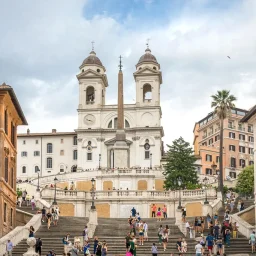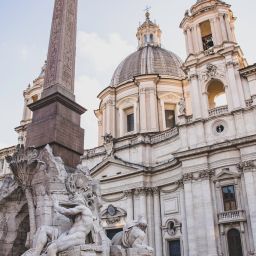


There’s a moment that happens to many travelers shortly after arriving in Rome. You step out into the sunlight, surrounded by ancient ruins, honking Vespas, crowds moving in every direction, and buildings that look like museums even when they’re just apartment blocks. You wanted to feel wonder. Instead, you feel disoriented — maybe even exhausted. If that sounds familiar, you’re not alone, and more importantly, it’s not your fault.
Rome has a way of overwhelming even the most experienced travelers. It isn’t simply a big city, nor just a historical destination. It is a place where three thousand years of history coexist with modern life in a dense, chaotic, breathtaking collision. Understanding why it feels like so much can actually transform your experience from stressful to magical.
The Weight of History Is Everywhere
In many cities, history is something you visit. In Rome, it’s something you navigate. You don’t just go to monuments — you trip over them on your way to lunch.
A casual walk might lead you past a temple from the Roman Republic, a Renaissance palace, a Baroque fountain, and a medieval church, all within a few minutes. There are layers beneath your feet as well: entire ancient neighborhoods lie buried below street level. Your brain is trying to process an impossible density of meaning while also figuring out where to cross the street safely.
This constant exposure to significance can create a kind of cognitive overload. You feel pressure to appreciate everything because you know how important it all is. Instead of relaxing into the experience, you worry about missing something.
Ironically, the feeling of being overwhelmed often comes from caring deeply about where you are. You’re aware that you’re in one of the most historically rich places on Earth, and your mind doesn’t want to waste a second of it.
The City Was Not Designed for Modern Visitors
Rome wasn’t built as a tourist-friendly capital with wide boulevards and clear navigation. It evolved organically over millennia. Streets curve unpredictably because they follow ancient paths. Squares open suddenly without warning. Addresses can be confusing, and GPS signals bounce off stone walls.
Even experienced travelers can feel lost here, not because they lack orientation skills but because the urban layout resists logic. A destination that looks close on the map might involve detours, stairs, or traffic barriers.
Public transportation adds another layer of complexity. While efficient in some areas, it doesn’t cover every historical zone seamlessly. Walking is often the best option, but distances accumulate quickly, especially under the Mediterranean sun.
The result is physical fatigue mixed with spatial disorientation — a powerful combination that can drain your enthusiasm if you don’t pace yourself.
Crowds Amplify the Sensory Load
Rome is one of the most visited cities in the world, and certain areas can feel like the center of the universe at peak hours. The Trevi Fountain, the Colosseum, the Vatican Museums — these places attract millions of people every year.
Crowds don’t just slow you down. They increase noise levels, reduce personal space, and make simple decisions harder. When you’re constantly navigating around other people, your brain stays in alert mode instead of relaxed exploration.
Add street vendors, tour groups, traffic, and the sheer volume of visual stimuli, and it becomes clear why many travelers feel overstimulated by midday.
Interestingly, the same city can feel completely different early in the morning or late at night, when the crowds thin and the architecture regains its quiet dignity. Timing, more than itinerary, often determines whether Rome feels chaotic or serene.
Decision Fatigue Is Real
Another reason Rome can feel overwhelming is the abundance of choices. Museums, churches, ruins, viewpoints, neighborhoods, restaurants, gelaterias, markets — the options are endless.
You wake up with a plan, but within minutes you’re tempted to deviate because something unexpected appears around the corner. Should you stop here or keep going? Visit another site or sit down for coffee? Wait in line or come back later?
Constant decision-making drains mental energy. By the afternoon, even small choices can feel exhausting, which is why travelers sometimes experience a sudden drop in mood or motivation despite being in a place they dreamed of visiting.
This isn’t a sign that you’re ungrateful. It’s simply your brain asking for a pause.
Expectations Can Create Pressure
Rome occupies a mythical place in the imagination. You’ve seen it in films, books, paintings, and social media feeds. You may have waited years to visit. That emotional buildup can create pressure to have a perfect experience.
When reality includes heat, crowds, delays, or confusion, the contrast can feel jarring. Instead of enjoying what’s in front of you, you might worry that you’re not experiencing it “correctly.”
Letting go of the idea of a perfect trip can be liberating. Rome rewards curiosity more than control. Some of the most memorable moments happen when plans fall apart and you stumble into a quiet piazza, a hidden church, or a family-run trattoria.
The Pace of Life Is Different
Roman life operates on rhythms that may differ from what you’re used to. Shops close in the afternoon. Dinner starts later. Service in restaurants is not rushed because meals are meant to be savored.
If you arrive with a tightly scheduled mindset, this slower pace can feel like inefficiency. But once you adjust, it becomes part of the charm. Sitting at an outdoor table as the sky changes color, watching locals pass by, is not wasted time — it’s one of the most authentic experiences the city offers.
Learning to align your expectations with the local rhythm can dramatically reduce stress.
Your Brain Is Processing Beauty Nonstop
There’s another, less obvious factor: aesthetic overload. Rome is visually intense. Marble statues, frescoed ceilings, dramatic light, intricate facades, and panoramic viewpoints appear constantly.
Beauty itself can be exhausting when it never pauses. Museums often design exhibitions with neutral spaces between galleries to give visitors visual rest. In Rome, the city is the exhibition, and there are no blank walls.
Taking deliberate breaks in quieter neighborhoods or parks can help reset your senses and allow you to appreciate the highlights more deeply afterward.
Why None of This Means You’re Doing It Wrong
Feeling overwhelmed in Rome doesn’t mean you’re not a good traveler. It means you’re human in a place that exceeds normal scales of experience.
The city challenges perception, stamina, and expectations all at once. Even people who live there sometimes feel its intensity. Accepting that overwhelm is part of the encounter can transform frustration into empathy for yourself.
Instead of trying to see everything, focus on seeing something well. Choose a neighborhood for the day. Sit down often. Allow time for wandering without goals.
Rome reveals itself gradually, not through speed but through presence.
How to Turn Overwhelm into Wonder
A few simple adjustments can change the emotional tone of your visit dramatically. Start early, when the city is quiet and the light is soft. Schedule only one or two major sights per day. Build in unscheduled time. Alternate busy areas with calmer ones. Eat regularly and stay hydrated — physical needs have a surprising impact on mood.
Most importantly, permit yourself to miss things. No one sees all of Rome in a single trip. Even lifelong residents keep discovering new corners.
When you stop trying to conquer the city and instead allow it to unfold, the overwhelm often dissolves into awe.
The Paradox That Makes Rome Unforgettable
Rome overwhelms because it compresses vast spans of time, culture, art, and daily life into a single living environment. It asks you to hold contradictions at once: ancient and modern, sacred and chaotic, monumental and intimate.
That intensity can be disorienting, but it’s also what makes the experience so profound. Few places on Earth offer such a deep sense of continuity between past and present.
Long after the confusion fades, what remains is the memory of standing in a place where history feels alive, where beauty appears around every corner, and where even getting lost can become a story worth telling.
So if Rome feels overwhelming, take a breath. Slow down. Look up. You’re not failing the city — you’re encountering it in the most honest way possible.