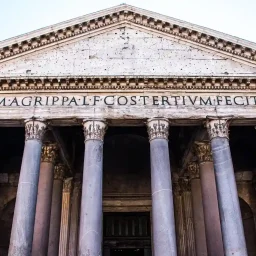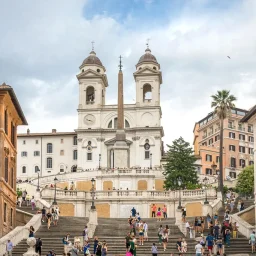


Rome has been many things over the centuries: a small settlement on the banks of the Tiber, the capital of a vast empire, the heart of Christianity, a medieval city, a Renaissance powerhouse, and a modern European capital. Yet through every transformation, one name has endured. Rome is known as the Eternal City, a title that feels both poetic and strangely accurate.
Understanding why Rome is called the Eternal City means looking beyond a simple nickname. It requires tracing ideas of time, power, religion, and memory that have shaped the city for more than two thousand years.
What does “Eternal City” really mean?
The Eternal City meaning is not tied to immortality in a literal sense. Rome has been sacked, damaged by fires and earthquakes, abandoned in parts, and rebuilt countless times. Eternity here refers to continuity: the idea that Rome, no matter how much it changes, never truly disappears.
Unlike other ancient capitals that faded into ruins, Rome remained inhabited, relevant, and symbolically powerful across different eras. Its eternity is cultural and historical rather than physical, rooted in the belief that Rome represents something permanent in the human story.
The origins of Rome’s eternal identity
Ancient beliefs about Rome’s destiny
The concept of Rome as eternal can already be found in ancient Roman thought. Roman writers believed their city had a unique destiny, protected by the gods and destined to rule. This idea was not modest mythology but a political and cultural statement.
The poet Virgil famously connected Rome’s origins to divine will, suggesting that the city was meant to endure beyond ordinary limits. In this worldview, Rome was not just a city; it was an idea meant to outlast generations, rulers, and even disasters.
Rome and the idea of universal time
As Rome expanded, it began to see itself as the center of the world. Roads radiated outward, laws spread across continents, and Roman time became the framework for organizing space and power. The more Rome grew, the more its leaders emphasized permanence and continuity.
This mindset laid the groundwork for the idea that Rome existed beyond the normal rise-and-fall cycle of cities. Even when political power shifted, the belief in Rome’s lasting importance remained.
Why Rome is called the Eternal City in Ancient Rome
Imperial propaganda and eternity
During the Roman Empire, eternity became an official theme. Emperors used architecture, monuments, and inscriptions to project the image of an unbreakable city. Massive structures were designed not just to impress, but to last, reinforcing the idea that Rome was built for eternity.
The Colosseum, for example, was more than a venue for entertainment. It was a statement of permanence and control, meant to show that Roman order would stand forever.
A city that outlived its emperors
Ironically, Rome’s claim to eternity grew stronger as individual emperors faded into history. Dynasties collapsed, but the city endured. This reinforced the perception that Rome itself was greater than any ruler, institution, or political system.
Even the fall of the Western Roman Empire did not erase Rome’s significance. Instead, it transformed it.
Rome nickname and Christian eternity
From imperial capital to spiritual center
One of the key reasons Rome is called the Eternal City is its transformation into the center of Christianity. When political power shifted away from Rome, spiritual authority took its place. The city became the seat of the papacy, anchoring its importance in religion rather than empire.
Christianity introduced a new dimension to eternity. Rome was no longer eternal because of conquest, but because it was associated with eternal salvation and divine continuity.
Martyrdom, memory, and sacred time
Early Christian martyrs were believed to have sanctified the city with their sacrifice. Churches were built over tombs, and sacred spaces replaced or absorbed pagan sites. This layering of belief systems reinforced Rome’s role as a bridge between earthly history and eternal meaning.
The idea of Rome existing simultaneously in historical time and sacred time strengthened its identity as a city beyond ordinary limits.
History of Rome as a city that never ends
Rome’s history is marked by decline and revival. After the empire’s fall, parts of the city were abandoned, and its population shrank dramatically. Yet Rome never vanished. Instead, it adapted, redefining itself again and again.
Medieval Rome drew legitimacy from its ancient past. Renaissance Rome revived classical art and architecture, consciously reconnecting with antiquity. Each era reinterpreted Rome’s history rather than rejecting it.
This continuous reinterpretation is central to the history of Rome and to its eternal reputation.