

Rome is one of the few cities in the world where history is not confined to museums. It unfolds along streets, under your feet, and inside buildings that are still part of daily life. Experiencing Ancient Rome in one day may sound ambitious, but with a smart route and a clear sense of priorities, it’s absolutely possible to trace the rise of the Roman Empire and understand how a small settlement on the Tiber became the capital of the ancient world.
This itinerary is designed for travelers who want more than a checklist. It connects monuments, spaces, and stories, allowing you to experience 2,000 years of Roman history in a single, well-paced day.
Understanding Ancient Rome before you start
Ancient Rome was not built all at once. It evolved over centuries, from the Republican era to Imperial Rome and beyond. Many of the most important ancient Roman sites were reused, modified, or built on top of one another, which is why Rome feels like an open-air archaeological archive.
To make sense of it all in one day, it helps to focus on three themes: political power, public life, and religious identity. Each stop on this itinerary reflects one or more of these pillars of Roman civilization.
Morning: the heart of Imperial power
The Colosseum: spectacle and authority
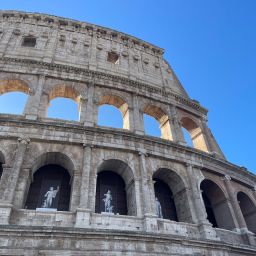
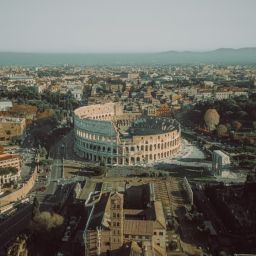
Begin your day at the Colosseum, Rome’s most iconic monument and a symbol of Imperial authority. Completed in the 1st century AD, this amphitheater hosted gladiatorial games, public executions, and staged hunts that reinforced the power of the emperor over life and death.
Standing inside the Colosseum is not just about architecture; it’s about understanding how entertainment, politics, and social control were intertwined in the Roman Empire. The sheer scale of the structure speaks to Rome’s engineering mastery and the resources of an empire that stretched across three continents.
Arriving early in the morning helps you avoid crowds and gives you time to appreciate the structure before moving on.
The Roman Forum: where Rome was governed
Just steps away lies the Roman Forum, the political, judicial, and commercial heart of Ancient Rome. This was where laws were debated, triumphal processions passed, and public speeches shaped the fate of the Republic and the Empire.
Walking through the Forum can feel overwhelming at first. Temples, basilicas, and arches appear as fragments, but together they form the blueprint of Roman public life. The Curia, where the Senate met, and the Via Sacra, the ceremonial road, help you imagine the Forum as a vibrant civic space rather than a silent ruin.
Palatine Hill: the origins of Rome
Rising above the Forum is the Palatine Hill, traditionally considered the birthplace of Rome. According to legend, Romulus founded the city here in 753 BC. Later, emperors chose this hill for their palaces, turning it into the most exclusive address in Ancient Rome.
From the Palatine, you gain a panoramic view of the Forum and the Circus Maximus, which helps you understand the geographical logic behind Rome’s development. This is also the ideal place to pause and reflect on how myth, power, and urban planning merged in Roman culture.
Midday: symbols of empire and urban life
Piazza Venezia and Imperial monuments
Leaving the archaeological area, head toward Piazza Venezia, where ancient and modern Rome collide. While the square itself is dominated by a modern monument, it sits near the remnants of Imperial forums built by emperors eager to leave their mark on the city.
This area illustrates how Ancient Rome constantly reinvented itself, using architecture as a political statement. Even in ruins, these spaces communicate ambition and competition among emperors.
Trajan’s Markets: Rome’s commercial innovation
Nearby are the Trajan’s Markets, often described as the world’s first shopping mall. Built in the early 2nd century AD, this multi-level complex housed administrative offices and commercial spaces.
Trajan’s Markets offer insight into daily life in Ancient Rome, beyond emperors and armies. They show how Rome managed trade, bureaucracy, and urban services for a population of over one million people.
Afternoon: religion, engineering, and everyday Rome
The Pantheon: perfection in architecture
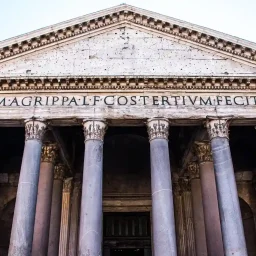
No ancient Rome itinerary is complete without the Pantheon. Built during the reign of Emperor Hadrian, the Pantheon is one of the best-preserved ancient buildings in the world.
Originally a temple dedicated to all gods, it later became a Christian church, which ensured its survival. Its massive concrete dome, still the largest unreinforced dome ever built, is a testament to Roman engineering. The oculus at the center connects the interior to the sky, creating a powerful symbolic and sensory experience.
The Pantheon demonstrates how Roman religion, architecture, and mathematics came together in a single, harmonious space.
Walking through the historic center
From the Pantheon, take time to walk through the surrounding streets. This part of Rome reflects how ancient structures were absorbed into medieval and Renaissance buildings, creating layers of history within a few meters.
This is also an ideal moment for a short break, allowing you to absorb what you’ve seen so far and prepare for the final chapter of the day.
Late afternoon: entertainment and daily life
Circus Maximus: mass entertainment in Ancient Rome
Make your way to the Circus Maximus, once the largest stadium in the ancient world. This was where chariot races drew crowds of up to 250,000 spectators, making it the most popular entertainment venue in Rome.
Although little remains today, the vast open space helps you visualize the scale of public events and their role in Roman society. Like the Colosseum, the Circus Maximus was a place where politics, sport, and public emotion intersected.
Baths of Caracalla: luxury and social life
If time allows, continue to the Baths of Caracalla, one of the most impressive bath complexes ever built. These baths were not just for hygiene; they were social hubs featuring libraries, gardens, and exercise areas.
The Baths of Caracalla reveal how advanced Roman infrastructure was and how leisure played a central role in urban life. They also highlight the concept of public space as a tool for social cohesion in the Roman Empire.
Can you really see Ancient Rome in one day?
Seeing everything is impossible, but experiencing the essence of Ancient Rome in one day is realistic. By focusing on key Roman Empire landmarks, you gain a clear understanding of how power, religion, entertainment, and daily life shaped one of history’s most influential civilizations.
This itinerary balances famous monuments with lesser-known insights, allowing you to move beyond surface-level sightseeing. With thoughtful pacing and a logical route, one day becomes enough to connect the dots of Rome’s extraordinary past.
How to make the most of your Ancient Rome itinerary
To fully appreciate Rome’s history in one day, preparation is key. Start early, wear comfortable shoes, and consider guided access to major sites to avoid long lines. A knowledgeable guide can also help transform ruins into stories, giving context to what might otherwise feel fragmented.
Ancient Rome is not just a chapter in history books; it is a living presence woven into the modern city. Experiencing it in one day is less about rushing and more about understanding how these monuments still speak to us, two millennia later.